Edge Computing for Autonomous Vehicles
Ultra-Low Latency Inference & Data Triage
[ BUSINESS CONTEXT ]
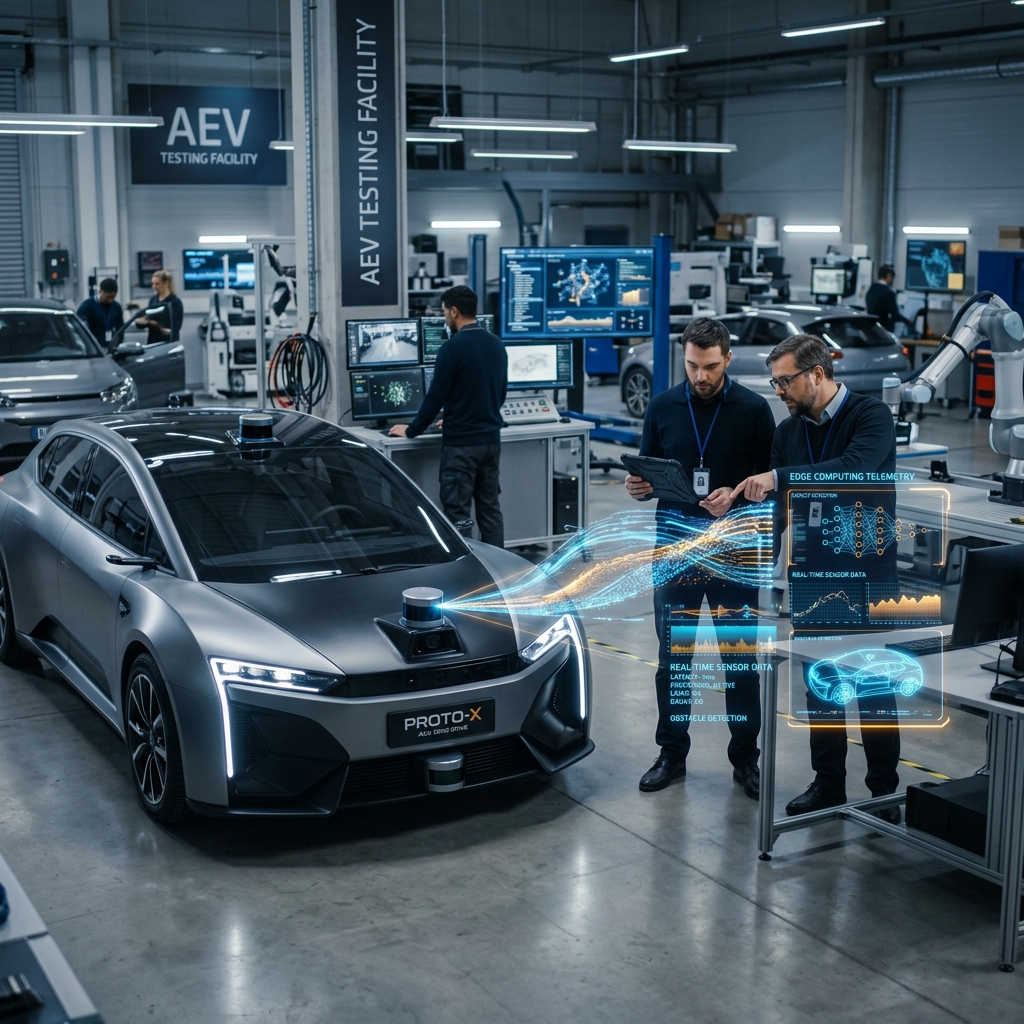
An automotive startup was developing Level 4 autonomous delivery vehicles. Each vehicle generated 4TB of sensor data daily. Transmitting this raw data over 5G to the cloud for processing was financially unviable and introduced dangerous latency.
[ PROJECT CHALLENGE ]
The architecture required complex machine learning inference to occur locally on the vehicle (the edge) within milliseconds, while only transmitting critical anomalies and compressed training data back to the centralized cloud.
[ STRATEGIC SOLUTION ]
We built a distributed edge-to-cloud architecture using AWS IoT Greengrass. Local NVIDIA Jetson modules handled real-time object detection, while a robust message broker synced aggregated metrics to the cloud when connections were stable.
Engineering Methodology
Edge ML Deployment
Optimized YOLOv8 models using TensorRT for high-FPS execution directly on the vehicle’s edge hardware.
Data Triage Pipeline
Implemented algorithms to discard nominal video feeds and only upload clips containing edge-cases (e.g., erratic pedestrians).
Secure OTA Updates
Engineered a cryptographically secure Over-The-Air (OTA) pipeline to update ML models across the fleet.
Cloud Digital Twin
Aggregated the triaged data in AWS to create dynamic digital twins for continuous simulation testing.
Quantified Engineering Impact
Processing at the edge allowed the vehicle control systems to react instantaneously to obstacles.
Intelligent data triage prevented the upload of petabytes of useless highway driving footage.
Mutual TLS and hardware-backed encryption keys prevented malicious actors from hijacking telemetry.
The robust OTA pipeline allowed data scientists to push improved models to the entire fleet every week.