NVH Mitigation in Agricultural Harvesters
15dB Noise Reduction in Cabin
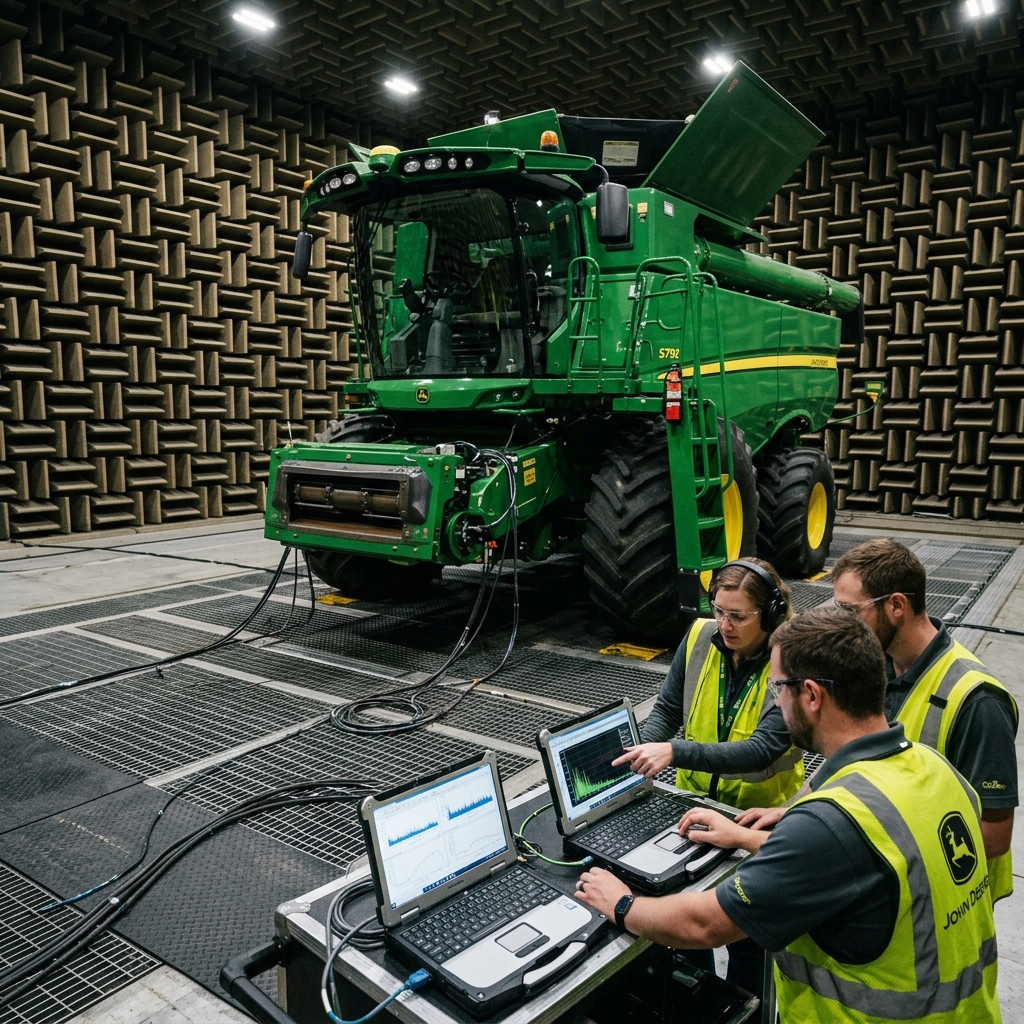
[ BUSINESS CONTEXT ]
An agricultural equipment manufacturer was losing market share because their new combine harvester was uncomfortably loud, causing severe operator fatigue during 14-hour harvest shifts. Furthermore, new EU noise regulations threatened to ban the machine entirely.
[ PROJECT CHALLENGE ]
The massive diesel engine and threshing drums created low-frequency structural vibrations that resonated directly into the operator cabin. Traditional sound-deadening foam was ineffective against these low frequencies and added too much weight.
[ STRATEGIC SOLUTION ]
We deployed a combination of experimental modal analysis and vibro-acoustic simulation to identify the resonant frequencies and design tuned mass dampers and active engine mounts to neutralize the vibrations at the source.
Engineering Methodology
Experimental Modal Analysis
Instrumented the physical harvester with 150 accelerometers to map how vibrations traveled from the engine to the cabin.
Vibro-Acoustic Simulation
Built an FEA/BEM (Boundary Element Method) model in LMS Virtual.Lab to simulate the acoustic cavity of the cabin.
Structural Modifications
Identified a "drumming" resonance in the cabin floor and added specific stamped stiffening ribs to shift the natural frequency.
Active Engine Mounts
Replaced solid rubber engine mounts with hydromounts tuned to isolate the specific 45Hz firing frequency of the diesel engine.
Quantified Engineering Impact
Sound pressure at the operator’s ear dropped from a fatiguing 88dB to a comfortable 73dB.
The tuned engine mounts successfully isolated the low-frequency vibrations from the chassis.
The machine easily cleared the stringent new EU workplace noise exposure directives.
Field testing showed operators could work 20% longer shifts without reporting significant fatigue.