Aerodynamic CFD Optimization for Wind Turbines
8% Increase in Energy Capture Efficiency
[ BUSINESS CONTEXT ]
A renewable energy consortium was developing a massive 15MW offshore wind turbine. To maximize profitability for the wind farm operators, they needed to squeeze every possible fraction of a percent of aerodynamic efficiency out of the blade design.
[ PROJECT CHALLENGE ]
The 115-meter blades faced complex aerodynamic challenges, including span-wise flow separation and massive vortex generation at the tips, which degraded performance and caused severe fatigue loading.
[ STRATEGIC SOLUTION ]
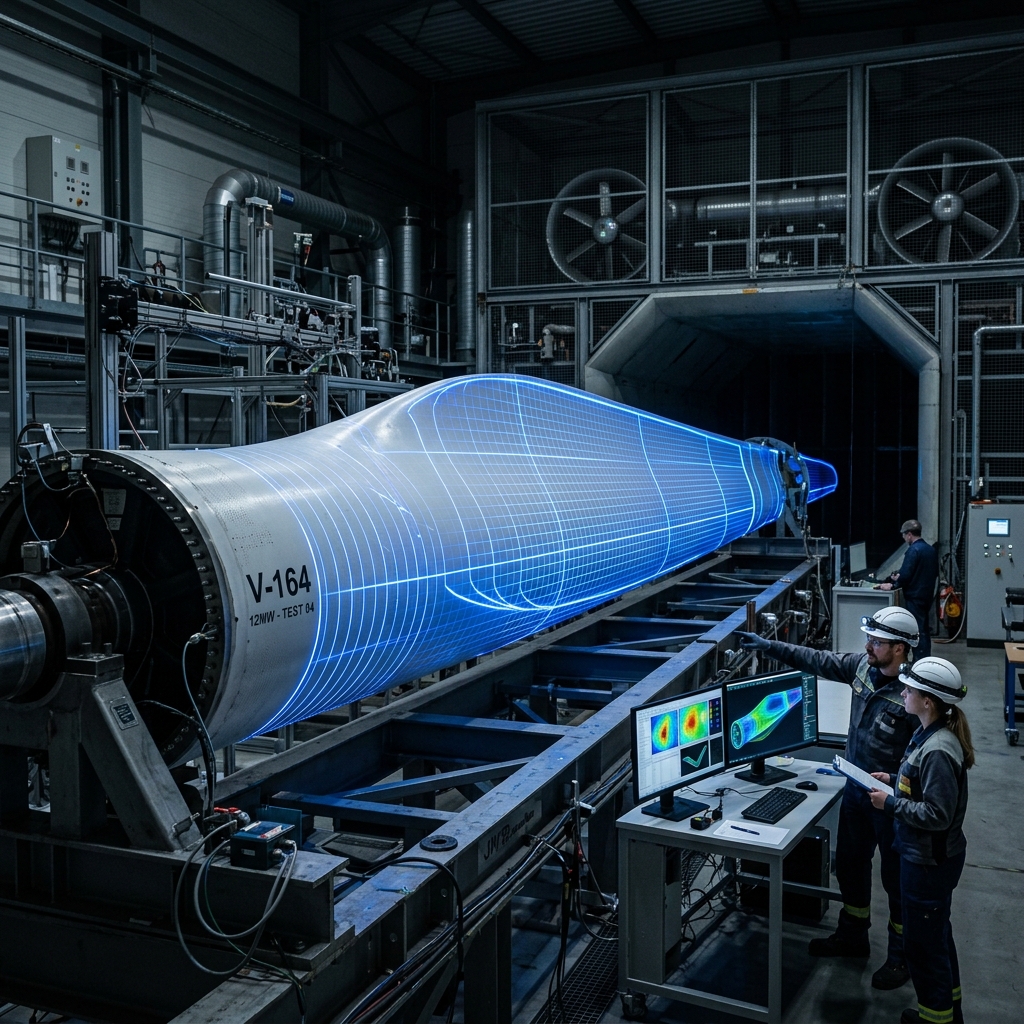
We utilized advanced Computational Fluid Dynamics (CFD) on high-performance computing clusters to analyze and iteratively tweak the 3D airfoil profiles, adding custom winglets and vortex generators.
Engineering Methodology
High-Fidelity Meshing
Created a 150-million cell volumetric mesh around the blade to capture microscopic boundary layer phenomena.
Transient CFD Analysis
Simulated the rotating blade under turbulent offshore wind profiles using Large Eddy Simulation (LES) models.
Airfoil Optimization
Iteratively adjusted the twist angle and chord length along the span to keep the flow attached at higher angles of attack.
Winglet Design
Designed a custom tip winglet to diffuse the tip vortex, reducing drag and acoustic noise.
Quantified Engineering Impact
Optimized aerodynamics increased the Annual Energy Production (AEP) of each turbine significantly.
Smoother airflow reduced dynamic buffeting, extending the operational lifespan of the blades and gearbox.
The new winglet design mitigated the loud "swish" noise caused by the tip vortex.
CFD results closely matched subsequent physical wind tunnel tests on scale models.